A monument to brotherhood, designed and built by brothers

93
'TIL
INFINITY
123 Thames St. South
Ingersoll, Ontario
By Duane Kumala-Thomas, Ryan Cochran & Jason Cochran

93 'til Infinity serves as a monumental bridge between the present and the known, unknown, remembered, and forgotten lineages of Ingersoll. This installation acknowledges the moments that shaped the Town of Ingersoll in its early stages and reclaims the visibility of Black pioneers who established roots in South Western Ontario during the 1800s.
The creative process for this work was rooted in deep archival research and community engagement, weaving together the specific historical context of a developing town with the broader narrative of resilience.
The railroad is a fitting metaphor: wood and iron, each with its own character and role, work together to create something greater than either could alone. Even in their differences, they create the path that ties communities to one another and moves history toward the future.

The Foundation of Ingersoll: A Historical Context
In the mid-19th century, Ingersoll emerged as a vital hub in Southwestern Ontario, its growth fueled by the expansion of the Great Western Railway. This accessibility transformed a fledgling settlement into a thriving industrial town where artisans and laborers carved out a new life. Within this landscape, the Black community found a unique foothold, contributing significantly to the social and economic fabric of the region.
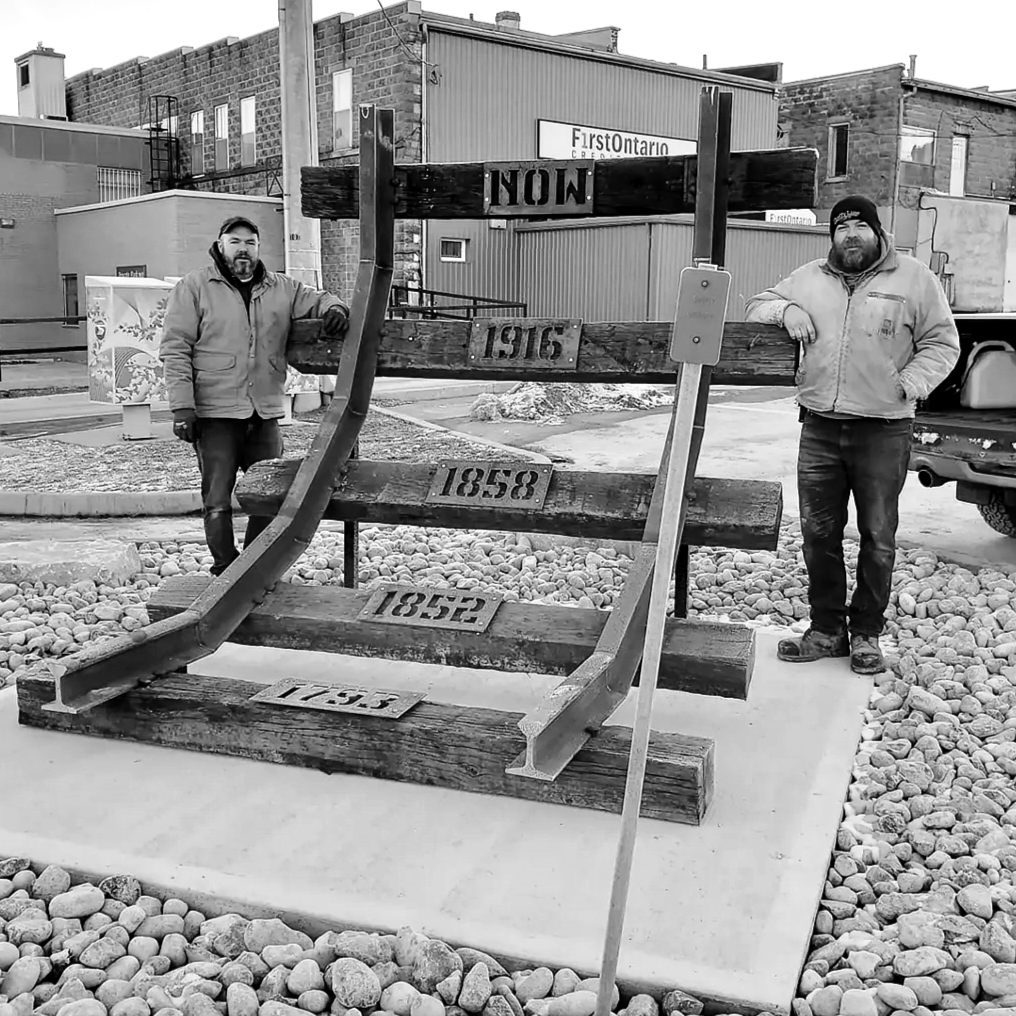
The installation 93 'til Infinity' bridges these historical narratives, utilizing the symbol of a railroad springing up from the underground into the open air above. This symbol signifies the journey of the famed underground railroad travelled by freedom seekers of the south. By examining the archives of South Western Ontario, the migration patterns and urban development that characterized this era are mapped, ensuring that the legacy of the town’s early Black population remains an integral part of our collective memory and the installation’s core inspiration.

Oxford on the Thames
Lieutenant-Governor John Graves Simcoe introduced a plan to settle Upper Canada by granting large tracts of land to colonizers who would bring families and build roads. Thomas Ingersoll took on that challenge with determination, and began his role in the founding and early development of Oxford County and the town that would later bear his name.
The Archeology of Memory
1793
Incorporation of a Village
In the mid-1800s, rising population, expanding industry, and increasingly impressive civic and commercial buildings. The town’s prosperity was driven by wheat, lumber, manufacturing, and railway activity, with several prominent hotels helping define its character, including landmarks such as the Daly House and the Royal.

1852
John Brown comes to Town
John Brown was a radical American abolitionist who who sought support, recruits, and funding for the fight against slavery. During his stay, he preached locally and spoke out against the violence of pro-slavery forces, reflecting Ingersoll’s connection to broader Black history and abolitionist movements.

1858

1916
Oxford's Own
In late 1915, Ottawa authorized the 168th Battalion. Men from across Oxford County quickly enlisted, earning the battalion the name “Oxford’s Own.” Of those who left Canada, 158 never returned, their service and sacrifice becoming a lasting part of the county’s history.
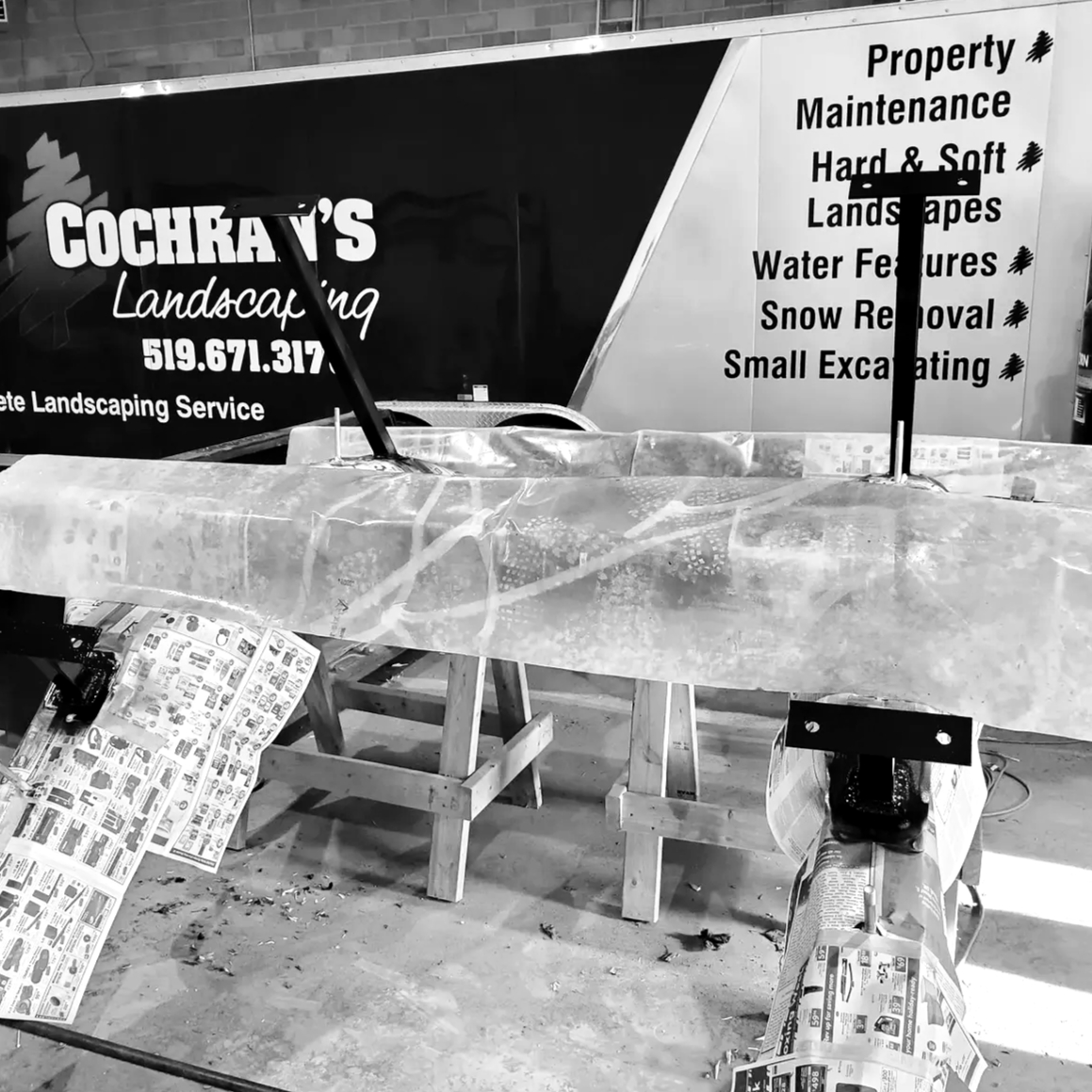
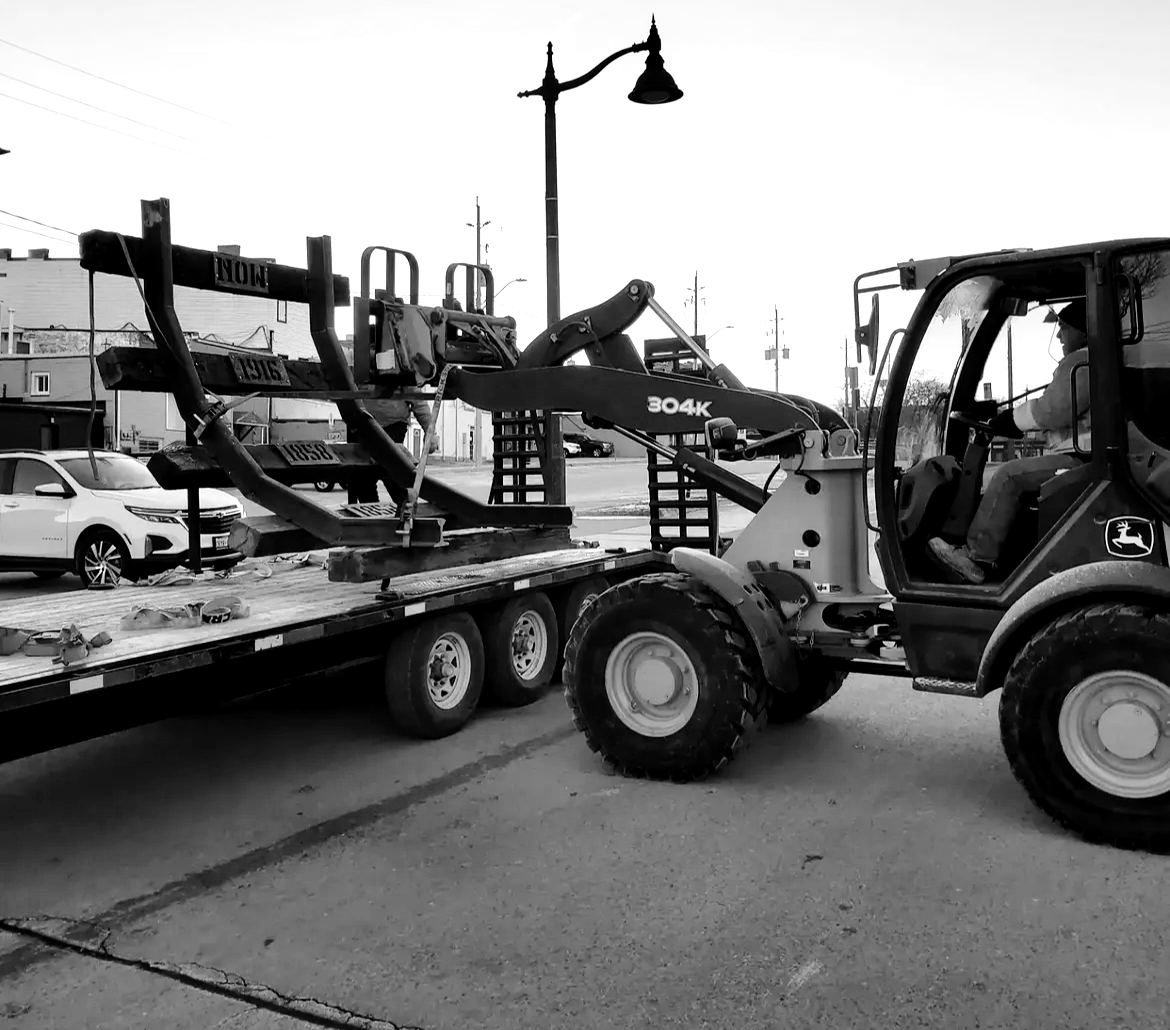
The inclusion of dates on the railroad ties was an important part of the sculpture’s concept, grounding the work in specific moments that helped shape Ingersoll’s identity over time. Rather than leaving history as something broad or symbolic, the dates invite viewers to consider how particular events, people, and turning points become part of a shared local memory. They help ground the sculpture within a real historical continuum, connecting the past to the present and culminating in “NOW” as a reminder that the lives we are living today will one day be looked back on as history as well.
BUILT BY
BROTHERHOOD
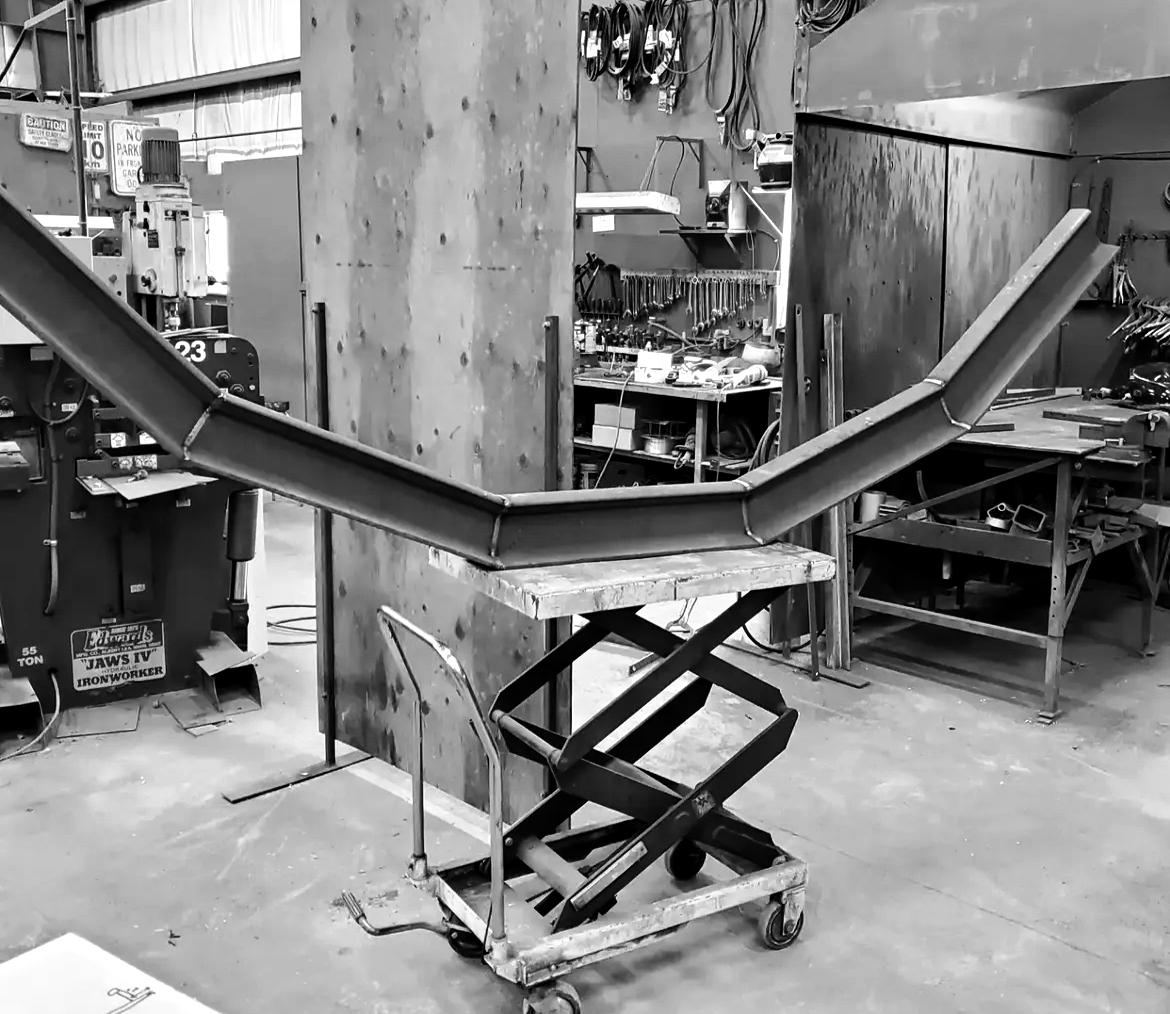
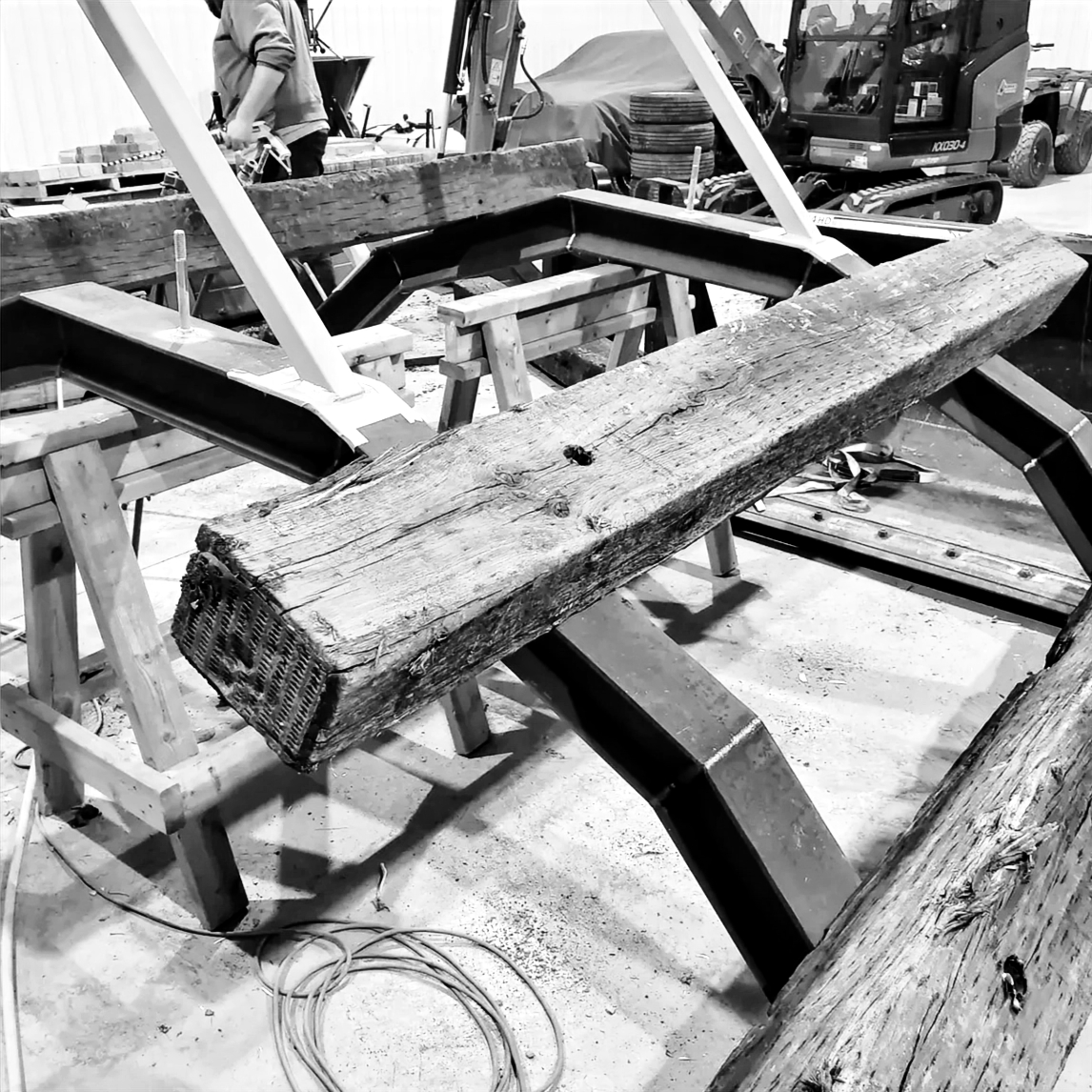
Crafted at the hands of two brothers and designed by a brother-in-law; the structure itself holds the larger story. A railroad track is iron rails running one direction and wooden ties running the other — separate materials on opposing axis, locked together only because the line demands it. They do not share a direction. They do not naturally agree. Yet the track holds, and it carries weight.
Ingersoll, like places, has been made the same way. Over the years the town has held people moving in different directions: those who arrived and those who were already here, those who opened doors and those who closed them, those who stayed and those who left, those whose stories were recorded and those whose stories were not. The sculpture does not resolve those oppositions. It simply shows that the town has continued because the intersecting lines still meet, still hold, and still rise.
The uppermost tie reads “NOW”, not as a tidy ending, but as the point where the different directions and point of views of Ingersoll’s people continue to meet, forever...


"NOW" reminds us that we are always living inside tomorrow’s history. We don't know which of our moments will echo through time, so live each one as if it matters, because it does."

— Duane Kumala-Thomas on the installation's challenge to viewers
Whether bird's eye views from steeples,
Or people's ties to railroads underground
Look and listen.
You too must be smitten
By sights and sounds all around
This historical town, Of ours.
Acknowledging land where tree strands rooted and water ran through it.
Tracking life through this town of ours.
With cabin erected Thomas affected a future forever in flower.
Tracking fate through this town of ours.
What was done to the land once Ingersoll found it was what eventually had Ingersoll founded.
Tracking persistence through this town of ours.
Inquisitive and riveted when John Brown visited
Tracking recruits through this town of ours.
From the steps of its BME church to the 168 Battalion's birth,
Tracking Oxford's Own through this town of ours.
A question rhetorical, but what more historical
Then this town of ours asking how?
History, her story, mystery, your story,
Our story's happening
NOW!
Always,
Duane Kumala-Thomas
This Town of Ours
The accompanying poem by DKT




A Historical Day
at the Library
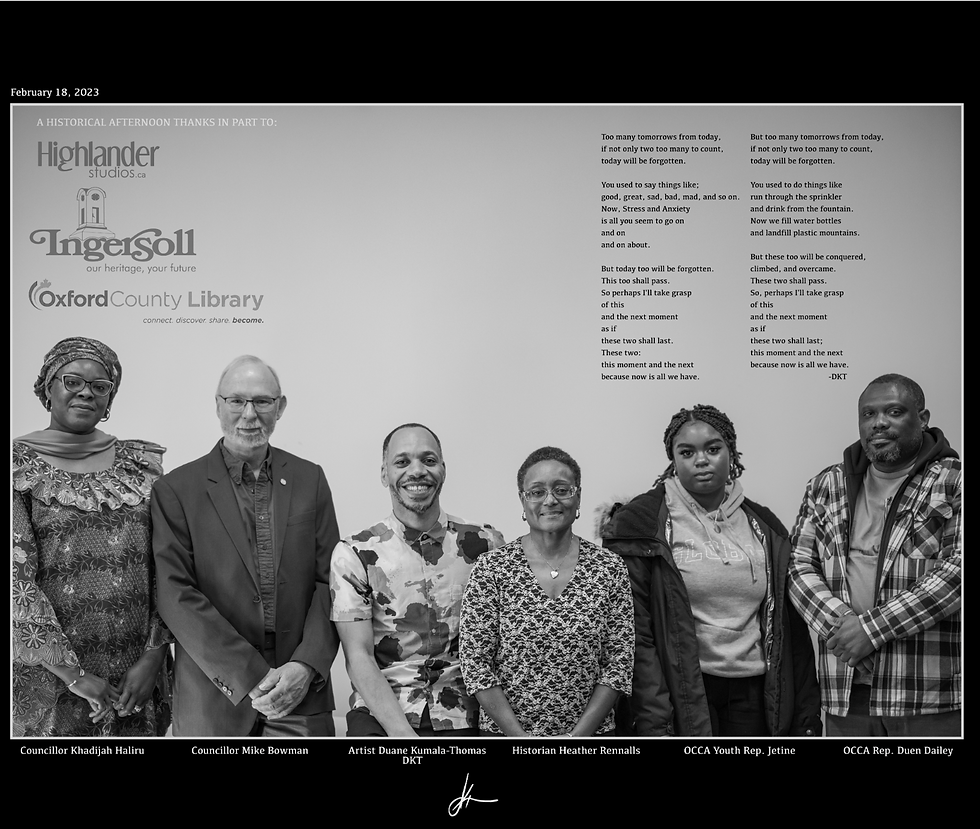
Since its installation, the sculpture has become a gathering point for conversations about history, education, belonging, and connection, inspiring dialogue with people of all ages and backgrounds.
One such day took place on a cold day in February, when town councillors, community members, and artists gathered at the library to share conversation, stories, smiles, and thoughtful reflection.
Off the Rails
Since its installation, the Underground Railroad sculpture has inspired conversations that extend well beyond its physical presence. Through interviews, podcasts, and historical features, its story continues to reach new audiences, inviting reflection on Black history, community, belonging, and the connections that shape our shared past.
From CBC's coverage to conversations on Clearing a New Path and the historical resources of the Oxford County Library, these perspectives offer opportunities to explore the sculpture's meaning, the stories behind its creation, and the important conversations it continues to inspire.